 Eating well is one of the best ways you can take care of yourself—and those who depend on you. Women have special dietary needs during each stage of their lives, including adolescence, pregnancy, breastfeeding, and menopause. Regardless of the stage of life you’re in, committing to a healthy diet decreases your chances of developing obesity, heart disease, diabetes and cancer. Eating healthy increases your energy level which makes it easier to juggle the variety of commitments you deal with every day. Read on to learn how to maintain a healthy diet, it’s easier than you think
Monday, July 27, 2009
Tips for a Healthy Diet and Better Nutrition
Eating well is one of the best ways you can take care of yourself—and those who depend on you. Women have special dietary needs during each stage of their lives, including adolescence, pregnancy, breastfeeding, and menopause. Regardless of the stage of life you’re in, committing to a healthy diet decreases your chances of developing obesity, heart disease, diabetes and cancer. Eating healthy increases your energy level which makes it easier to juggle the variety of commitments you deal with every day. Read on to learn how to maintain a healthy diet, it’s easier than you think

Daily Exercise Suggestions
Walk 10 Minutes a Day and Increase Your Fitness LevelOld thinking was to work out in a sweat-filled gym for hours a day. No pain, no gain. New studies show that even short bouts of activity can increase your fitness level, especially if you're new at working out.
Park and Walk
Whenever you have an errand, park your car as far away as you can handle and walk to the store. At the mall, park at the farthest end and walk the length of the mall. Use every opportunity to walk. At the end of the day, it all adds up to better fitness.
Crunch in Bed
Before you even get out of bed in the morning, do 10 stomach crunches while lying flat on your mattress. Increase daily by one until you get up to 100. Think you'll never get there? Try it. You may eventually have to set your clock to wake up 15 minutes earlier, a small price to pay for a flatter stomach.
Park and Walk
Whenever you have an errand, park your car as far away as you can handle and walk to the store. At the mall, park at the farthest end and walk the length of the mall. Use every opportunity to walk. At the end of the day, it all adds up to better fitness.
Crunch in Bed
Before you even get out of bed in the morning, do 10 stomach crunches while lying flat on your mattress. Increase daily by one until you get up to 100. Think you'll never get there? Try it. You may eventually have to set your clock to wake up 15 minutes earlier, a small price to pay for a flatter stomach.
10 Essential Health Tips (The Basics to Practice Every Day)
1. Move More
Make it a daily challenge to find ways to move your body. Climb stairs if given a choice between that and escalators or elevators. Walk your dog; chase your kids; toss balls with friends, mow the lawn. Anything that moves your limbs is not only a fitness tool, it's a stress buster. Think 'move' in small increments of time. It doesn't have to be an hour in the gym or a 45-minute aerobic dance class or tai chi or kickboxing. But that's great when you're up to it. Meanwhile, move more. Thought for the day: Cha, Cha, Cha…. Then do it!
2. Cut Fat
Avoid the obvious such as fried foods, burgers and other fatty meats (i.e. pork, bacon, ham, salami, ribs and sausage). Dairy products such as cheese, cottage cheese, milk and cream should be eaten in low fat versions. Nuts and sandwich meats, mayonnaise, margarine, butter and sauces should be eaten in limited amounts. Most are available in lower fat versions such as substitute butter, fat free cheeses and mayonnaise. Thought for the day: Lean, mean, fat-burning machine…. Then be one!
3. Quit Smoking
The jury is definitely in on this verdict. Ever since 1960 when the Surgeon General announced that smoking was harmful to your health, Americans have been reducing their use of tobacco products that kill. Just recently, we've seen a surge in smoking in adolescents and teens. Could it be the Hollywood influence? It seems the stars in every movie of late smoke cigarettes. Beware. Warn your children of the false romance or 'tough guy' stance of Hollywood smokers. Thought for the day: Give up just one cigarette…. the next one.
4. Reduce Stress
Easier said than done, stress busters come in many forms. Some techniques recommended by experts are to think positive thoughts. Spend 30 minutes a day doing something you like. (i.e.,Soak in a hot tub; walk on the beach or in a park; read a good book; visit a friend; play with your dog; listen to soothing music; watch a funny movie. Get a massage, a facial or a haircut. Meditate. Count to ten before losing your temper or getting aggravated. Avoid difficult people when possible. Thought for the day: When seeing red, think pink clouds….then float on them.
5. Protect Yourself from Pollution
If you can't live in a smog-free environment, at least avoid smoke-filled rooms, high traffic areas, breathing in highway fumes and exercising near busy thoroughfares. Exercise outside when the smog rating is low. Exercise indoors in air conditioning when air quality is good. Plant lots of shrubbery in your yard. It's a good pollution and dirt from the street deterrent. Thought for the day: 'Smoke gets in your eyes'…and your mouth, and your nose and your lungs as do pollutants….hum the tune daily.
6. Wear Your Seat Belt
Statistics show that seat belts add to longevity and help alleviate potential injuries in car crashes. Thought for the day: Buckle down and buckle up.
7. Floss Your Teeth
Recent studies make a direct connection between longevity and teeth flossing. Nobody knows exactly why. Perhaps it's because people who floss tend to be more health conscious than people who don't? Thought for the day: Floss and be your body's boss.
8. Avoid Excessive Drinking
While recent studies show a glass of wine or one drink a day (two for men) can help protect against heart disease, more than that can cause other health problems such as liver and kidney disease and cancer. Thought for the day: A jug of wine should last a long time.
9. Keep a Positive Mental Outlook
There's a definitive connection between living well and healthfully and having a cheerful outlook on life. Thought for the day: You can't be unhappy when you're smiling or singing.
10. Choose Your Parents Well
The link between genetics and health is a powerful one. But just because one or both of your parents died young in ill health doesn't mean you cannot counteract the genetic pool handed you. Thought for the day: Follow these basic tips for healthy living and you can better control your own destiny.
Make it a daily challenge to find ways to move your body. Climb stairs if given a choice between that and escalators or elevators. Walk your dog; chase your kids; toss balls with friends, mow the lawn. Anything that moves your limbs is not only a fitness tool, it's a stress buster. Think 'move' in small increments of time. It doesn't have to be an hour in the gym or a 45-minute aerobic dance class or tai chi or kickboxing. But that's great when you're up to it. Meanwhile, move more. Thought for the day: Cha, Cha, Cha…. Then do it!
2. Cut Fat
Avoid the obvious such as fried foods, burgers and other fatty meats (i.e. pork, bacon, ham, salami, ribs and sausage). Dairy products such as cheese, cottage cheese, milk and cream should be eaten in low fat versions. Nuts and sandwich meats, mayonnaise, margarine, butter and sauces should be eaten in limited amounts. Most are available in lower fat versions such as substitute butter, fat free cheeses and mayonnaise. Thought for the day: Lean, mean, fat-burning machine…. Then be one!
3. Quit Smoking
The jury is definitely in on this verdict. Ever since 1960 when the Surgeon General announced that smoking was harmful to your health, Americans have been reducing their use of tobacco products that kill. Just recently, we've seen a surge in smoking in adolescents and teens. Could it be the Hollywood influence? It seems the stars in every movie of late smoke cigarettes. Beware. Warn your children of the false romance or 'tough guy' stance of Hollywood smokers. Thought for the day: Give up just one cigarette…. the next one.
4. Reduce Stress
Easier said than done, stress busters come in many forms. Some techniques recommended by experts are to think positive thoughts. Spend 30 minutes a day doing something you like. (i.e.,Soak in a hot tub; walk on the beach or in a park; read a good book; visit a friend; play with your dog; listen to soothing music; watch a funny movie. Get a massage, a facial or a haircut. Meditate. Count to ten before losing your temper or getting aggravated. Avoid difficult people when possible. Thought for the day: When seeing red, think pink clouds….then float on them.
5. Protect Yourself from Pollution
If you can't live in a smog-free environment, at least avoid smoke-filled rooms, high traffic areas, breathing in highway fumes and exercising near busy thoroughfares. Exercise outside when the smog rating is low. Exercise indoors in air conditioning when air quality is good. Plant lots of shrubbery in your yard. It's a good pollution and dirt from the street deterrent. Thought for the day: 'Smoke gets in your eyes'…and your mouth, and your nose and your lungs as do pollutants….hum the tune daily.
6. Wear Your Seat Belt
Statistics show that seat belts add to longevity and help alleviate potential injuries in car crashes. Thought for the day: Buckle down and buckle up.
7. Floss Your Teeth
Recent studies make a direct connection between longevity and teeth flossing. Nobody knows exactly why. Perhaps it's because people who floss tend to be more health conscious than people who don't? Thought for the day: Floss and be your body's boss.
8. Avoid Excessive Drinking
While recent studies show a glass of wine or one drink a day (two for men) can help protect against heart disease, more than that can cause other health problems such as liver and kidney disease and cancer. Thought for the day: A jug of wine should last a long time.
9. Keep a Positive Mental Outlook
There's a definitive connection between living well and healthfully and having a cheerful outlook on life. Thought for the day: You can't be unhappy when you're smiling or singing.
10. Choose Your Parents Well
The link between genetics and health is a powerful one. But just because one or both of your parents died young in ill health doesn't mean you cannot counteract the genetic pool handed you. Thought for the day: Follow these basic tips for healthy living and you can better control your own destiny.
Saturday, July 4, 2009
Cancer
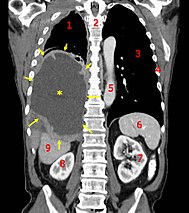
Cancer (medical term: malignant neoplasm) is a class of diseases in which a group of cells display uncontrolled growth (division beyond the normal limits), invasion (intrusion on and destruction of adjacent tissues), and sometimes metastasis (spread to other locations in the body via lymph or blood). These three malignant properties of cancers differentiate them from benign tumors, which are self-limited, and do not invade or metastasize. Most cancers form a tumor but some, like leukemia, do not. The branch of medicine concerned with the study, diagnosis, treatment, and prevention of cancer is oncology.
Cancer may affect people at all ages, even fetuses, but the risk for most varieties increases with age.[1] Cancer causes about 13% of all human deaths.[2] According to the American Cancer Society, 7.6 million people died from cancer in the world during 2007.[3] Cancers can affect all animals.
Nearly all cancers are caused by abnormalities in the genetic material of the transformed cells.[4] These abnormalities may be due to the effects of carcinogens, such as tobacco smoke, radiation, chemicals, or infectious agents. Other cancer-promoting genetic abnormalities may be randomly acquired through errors in DNA replication, or are inherited, and thus present in all cells from birth. The heritability of cancers are usually affected by complex interactions between carcinogens and the host's genome. New aspects of the genetics of cancer pathogenesis, such as DNA methylation, and microRNAs are increasingly recognized as important.
Genetic abnormalities found in cancer typically affect two general classes of genes. Cancer-promoting oncogenes are typically activated in cancer cells, giving those cells new properties, such as hyperactive growth and division, protection against programmed cell death, loss of respect for normal tissue boundaries, and the ability to become established in diverse tissue environments. Tumor suppressor genes are then inactivated in cancer cells, resulting in the loss of normal functions in those cells, such as accurate DNA replication, control over the cell cycle, orientation and adhesion within tissues, and interaction with protective cells of the immune system.
Diagnosis usually requires the histologic examination of a tissue biopsy specimen by a pathologist, although the initial indication of malignancy can be symptoms or radiographic imaging abnormalities. Most cancers can be treated and some cured, depending on the specific type, location, and stage. Once diagnosed, cancer is usually treated with a combination of surgery, chemotherapy and radiotherapy. As research develops, treatments are becoming more specific for different varieties of cancer. There has been significant progress in the development of targeted therapy drugs that act specifically on detectable molecular abnormalities in certain tumors, and which minimize damage to normal cells. The prognosis of cancer patients is most influenced by the type of cancer, as well as the stage, or extent of the disease. In addition, histologic grading and the presence of specific molecular markers can also be useful in establishing prognosis, as well as in determining individual
Subscribe to:
Posts (Atom)