Everyone knows that we could not live without water. During this article I want to underline for you a few benefits that the water has on the human body. You won’t know some of them or you probably considered them not important. First of all let me add that an individual needs steady hydration during his lifetime, each year, every day.
Studies show that 1.5 liters of water are compulsory in order to ensure that the kidney functions stay at the normal levels. If you add a glass of fresh juice and another one of milk, it should be enough to provide your body with the necessary daily amount of liquids. You should avoid the mineral and sweet drinks, because they won’t help in a weight loss diet. Better add instead some red wine, around 3 glasses a day. You can also drink coffee, but only in the morning.
Water can be also mixed with lemon in order to help our organism. If you drink a glass of hot water with lemon 10 minutes before a meal and a second one 30 minutes after the meal you will register a wise move. The first glass will occupy space in your stomach and this way less food would be needed to fill it up. The after the meal glass helps the digestion.
Another important trick that relates water and the human body is the Scottish shower. Our body works at it’s top parameters when the blood circulation is optimal. To stimulate the circulation, do each morning and evening a shower where you alternate cold and hot water. Do it wisely and steady and try to avoid a heart-attack that can be caused by huge temperature differences. The Scottish shower reduces cellulites and, for women, it maintains the fitness and shape of the breasts.
Monday, October 5, 2009

Vitamins And Minerals
In order to understand how vitamins and minerals work, we need to understand that there are many differents requirements for succesful vitamin intake. We all are aware that vitamins and minerals are required by the body to function on a day to day basis, which is why we can sometimes benefit from supplementing our diets with multivitamins.
Vitamins are absorbed within the body to be used for growth, repair and cell replication which allows us to remain healthy on a day to day basis. Vitamin A, which is required for healthy skin, eyes and is known to protect against cancer and other diseases is more likely to be absorbed when taken with fatty foods. This could be oily fish for example, which is alot healthier than saturated fat heavy food like cheese.
Vitamin A is also more likely to be absorbed when combined with vitamin E, which is a vitamin found in food like carrots. Alternatively, you could take multivitamins alongside your normal food regime to increase this intake.Multivitamins are sometimes recommended for people who have inadequate diets or are unable to eat certain foods for medical reasons.
Because vitamins are required for a wide range of bodily functions, yet they all require different circumstances to be absorbed into the body, it is recommended to eat a well balanced, diverse range of food. By allowing your body to process a wide range of nutrient heavy food, you can give your body a good chance to heal and improve on a day to day basis. If you are concern about multivitamins or supplement intake, you should also consult your doctor.
Vitamins are absorbed within the body to be used for growth, repair and cell replication which allows us to remain healthy on a day to day basis. Vitamin A, which is required for healthy skin, eyes and is known to protect against cancer and other diseases is more likely to be absorbed when taken with fatty foods. This could be oily fish for example, which is alot healthier than saturated fat heavy food like cheese.
Vitamin A is also more likely to be absorbed when combined with vitamin E, which is a vitamin found in food like carrots. Alternatively, you could take multivitamins alongside your normal food regime to increase this intake.Multivitamins are sometimes recommended for people who have inadequate diets or are unable to eat certain foods for medical reasons.
Because vitamins are required for a wide range of bodily functions, yet they all require different circumstances to be absorbed into the body, it is recommended to eat a well balanced, diverse range of food. By allowing your body to process a wide range of nutrient heavy food, you can give your body a good chance to heal and improve on a day to day basis. If you are concern about multivitamins or supplement intake, you should also consult your doctor.
Choices in modern treadmills
Exercise regularly – a brisk walk every day does wonders! So go cycling, swimming, and jogging. Working out on compact treadmills is the alternative to working out outdoors. Going to a gym is good as well. Working out with a trainer on Manual Treadmills has the advantage of someone monitoring your exercise routine.
People need to check online offers on a regular basis in order to use these new deals and discount codes within their validity period to ensure monetary benefits when purchasing exercise equipment. Others on the lookout for such deals may carry out Internet searches or approach the company directly to know about purchase benefits or free gifts
People should see to it that they are not cheated into buying old or spoiled compact treadmills under the garb of discount price. Some companies also offer discounts on old or obsolete Manual Treadmills so that they can be sold-off, to make place for new and advanced models. One has to be sure that he/she is not being cheated into buying useless things in the bargain. Exercising is a priority and can work wonders with the right equipment. The compact versions are easy to store and make a treadmill workout a pleasant experience each day.
People need to check online offers on a regular basis in order to use these new deals and discount codes within their validity period to ensure monetary benefits when purchasing exercise equipment. Others on the lookout for such deals may carry out Internet searches or approach the company directly to know about purchase benefits or free gifts
People should see to it that they are not cheated into buying old or spoiled compact treadmills under the garb of discount price. Some companies also offer discounts on old or obsolete Manual Treadmills so that they can be sold-off, to make place for new and advanced models. One has to be sure that he/she is not being cheated into buying useless things in the bargain. Exercising is a priority and can work wonders with the right equipment. The compact versions are easy to store and make a treadmill workout a pleasant experience each day.
Daily Exercise Suggestions
Walk 10 Minutes a Day and Increase Your Fitness Level
Old thinking was to work out in a sweat-filled gym for hours a day. No pain, no gain. New studies show that even short bouts of activity can increase your fitness level, especially if you're new at working out.
Park and Walk
Whenever you have an errand, park your car as far away as you can handle and walk to the store. At the mall, park at the farthest end and walk the length of the mall. Use every opportunity to walk. At the end of the day, it all adds up to better fitness.
Crunch in Bed
Before you even get out of bed in the morning, do 10 stomach crunches while lying flat on your mattress. Increase daily by one until you get up to 100. Think you'll never get there? Try it. You may eventually have to set your clock to wake up 15 minutes earlier, a small price to pay for a flatter stomach.
Old thinking was to work out in a sweat-filled gym for hours a day. No pain, no gain. New studies show that even short bouts of activity can increase your fitness level, especially if you're new at working out.
Park and Walk
Whenever you have an errand, park your car as far away as you can handle and walk to the store. At the mall, park at the farthest end and walk the length of the mall. Use every opportunity to walk. At the end of the day, it all adds up to better fitness.
Crunch in Bed
Before you even get out of bed in the morning, do 10 stomach crunches while lying flat on your mattress. Increase daily by one until you get up to 100. Think you'll never get there? Try it. You may eventually have to set your clock to wake up 15 minutes earlier, a small price to pay for a flatter stomach.
10 Essential Health Tips
1. Move More
Make it a daily challenge to find ways to move your body. Climb stairs if given a choice between that and escalators or elevators. Walk your dog; chase your kids; toss balls with friends, mow the lawn. Anything that moves your limbs is not only a fitness tool, it's a stress buster. Think 'move' in small increments of time. It doesn't have to be an hour in the gym or a 45-minute aerobic dance class or tai chi or kickboxing. But that's great when you're up to it. Meanwhile, move more. Thought for the day: Cha, Cha, Cha…. Then do it!
2. Cut Fat
Avoid the obvious such as fried foods, burgers and other fatty meats (i.e. pork, bacon, ham, salami, ribs and sausage). Dairy products such as cheese, cottage cheese, milk and cream should be eaten in low fat versions. Nuts and sandwich meats, mayonnaise, margarine, butter and sauces should be eaten in limited amounts. Most are available in lower fat versions such as substitute butter, fat free cheeses and mayonnaise. Thought for the day: Lean, mean, fat-burning machine…. Then be one!
3. Quit Smoking
The jury is definitely in on this verdict. Ever since 1960 when the Surgeon General announced that smoking was harmful to your health, Americans have been reducing their use of tobacco products that kill. Just recently, we've seen a surge in smoking in adolescents and teens. Could it be the Hollywood influence? It seems the stars in every movie of late smoke cigarettes. Beware. Warn your children of the false romance or 'tough guy' stance of Hollywood smokers. Thought for the day: Give up just one cigarette…. the next one.
4. Reduce Stress
Easier said than done, stress busters come in many forms. Some techniques recommended by experts are to think positive thoughts. Spend 30 minutes a day doing something you like. (i.e.,Soak in a hot tub; walk on the beach or in a park; read a good book; visit a friend; play with your dog; listen to soothing music; watch a funny movie. Get a massage, a facial or a haircut. Meditate. Count to ten before losing your temper or getting aggravated. Avoid difficult people when possible. Thought for the day: When seeing red, think pink clouds….then float on them.
5. Protect Yourself from Pollution
If you can't live in a smog-free environment, at least avoid smoke-filled rooms, high traffic areas, breathing in highway fumes and exercising near busy thoroughfares. Exercise outside when the smog rating is low. Exercise indoors in air conditioning when air quality is good. Plant lots of shrubbery in your yard. It's a good pollution and dirt from the street deterrent. Thought for the day: 'Smoke gets in your eyes'…and your mouth, and your nose and your lungs as do pollutants….hum the tune daily.
6. Wear Your Seat Belt
Statistics show that seat belts add to longevity and help alleviate potential injuries in car crashes. Thought for the day: Buckle down and buckle up.
7. Floss Your Teeth
Recent studies make a direct connection between longevity and teeth flossing. Nobody knows exactly why. Perhaps it's because people who floss tend to be more health conscious than people who don't? Thought for the day: Floss and be your body's boss.
8. Avoid Excessive Drinking
While recent studies show a glass of wine or one drink a day (two for men) can help protect against heart disease, more than that can cause other health problems such as liver and kidney disease and cancer. Thought for the day: A jug of wine should last a long time.
9. Keep a Positive Mental Outlook
There's a definitive connection between living well and healthfully and having a cheerful outlook on life. Thought for the day: You can't be unhappy when you're smiling or singing.
10. Choose Your Parents Well
The link between genetics and health is a powerful one. But just because one or both of your parents died young in ill health doesn't mean you cannot counteract the genetic pool handed you. Thought for the day: Follow these basic tips for healthy living and you can better control your own destiny.
Make it a daily challenge to find ways to move your body. Climb stairs if given a choice between that and escalators or elevators. Walk your dog; chase your kids; toss balls with friends, mow the lawn. Anything that moves your limbs is not only a fitness tool, it's a stress buster. Think 'move' in small increments of time. It doesn't have to be an hour in the gym or a 45-minute aerobic dance class or tai chi or kickboxing. But that's great when you're up to it. Meanwhile, move more. Thought for the day: Cha, Cha, Cha…. Then do it!
2. Cut Fat
Avoid the obvious such as fried foods, burgers and other fatty meats (i.e. pork, bacon, ham, salami, ribs and sausage). Dairy products such as cheese, cottage cheese, milk and cream should be eaten in low fat versions. Nuts and sandwich meats, mayonnaise, margarine, butter and sauces should be eaten in limited amounts. Most are available in lower fat versions such as substitute butter, fat free cheeses and mayonnaise. Thought for the day: Lean, mean, fat-burning machine…. Then be one!
3. Quit Smoking
The jury is definitely in on this verdict. Ever since 1960 when the Surgeon General announced that smoking was harmful to your health, Americans have been reducing their use of tobacco products that kill. Just recently, we've seen a surge in smoking in adolescents and teens. Could it be the Hollywood influence? It seems the stars in every movie of late smoke cigarettes. Beware. Warn your children of the false romance or 'tough guy' stance of Hollywood smokers. Thought for the day: Give up just one cigarette…. the next one.
4. Reduce Stress
Easier said than done, stress busters come in many forms. Some techniques recommended by experts are to think positive thoughts. Spend 30 minutes a day doing something you like. (i.e.,Soak in a hot tub; walk on the beach or in a park; read a good book; visit a friend; play with your dog; listen to soothing music; watch a funny movie. Get a massage, a facial or a haircut. Meditate. Count to ten before losing your temper or getting aggravated. Avoid difficult people when possible. Thought for the day: When seeing red, think pink clouds….then float on them.
5. Protect Yourself from Pollution
If you can't live in a smog-free environment, at least avoid smoke-filled rooms, high traffic areas, breathing in highway fumes and exercising near busy thoroughfares. Exercise outside when the smog rating is low. Exercise indoors in air conditioning when air quality is good. Plant lots of shrubbery in your yard. It's a good pollution and dirt from the street deterrent. Thought for the day: 'Smoke gets in your eyes'…and your mouth, and your nose and your lungs as do pollutants….hum the tune daily.
6. Wear Your Seat Belt
Statistics show that seat belts add to longevity and help alleviate potential injuries in car crashes. Thought for the day: Buckle down and buckle up.
7. Floss Your Teeth
Recent studies make a direct connection between longevity and teeth flossing. Nobody knows exactly why. Perhaps it's because people who floss tend to be more health conscious than people who don't? Thought for the day: Floss and be your body's boss.
8. Avoid Excessive Drinking
While recent studies show a glass of wine or one drink a day (two for men) can help protect against heart disease, more than that can cause other health problems such as liver and kidney disease and cancer. Thought for the day: A jug of wine should last a long time.
9. Keep a Positive Mental Outlook
There's a definitive connection between living well and healthfully and having a cheerful outlook on life. Thought for the day: You can't be unhappy when you're smiling or singing.
10. Choose Your Parents Well
The link between genetics and health is a powerful one. But just because one or both of your parents died young in ill health doesn't mean you cannot counteract the genetic pool handed you. Thought for the day: Follow these basic tips for healthy living and you can better control your own destiny.
Saturday, August 29, 2009
Vegetables and Fruits

Fruits and vegetables are low in calories and are packed with vitamins, minerals, protective plant compounds and fiber. They are a great source of nutrients and vital for a healthy diet.
Fruits and vegetables should be part of every meal, and be your first choice for a snack. Eat a minimum of five portions each day. The antioxidants and other nutrients in these foods help protect against developing certain types of cancer and other diseases.
Greens: Dark leafy green vegetables are a vital part of a healthy diet since they are packed with nutrients such as calcium, magnesium, iron, potassium, zinc, and Vitamins A, C, E and K. Greens help to strengthen the blood and respiratory systems. They are currently the most lacking food in the American diet. Be adventurous in your choice of greens: kale, mustard greens, broccoli, Chinese cabbage are just a few of the many options.
Sweet Vegetables: Naturally sweet vegetables are an excellent way to add healthy sweetness to your meals and reduce your cravings for other sweets. Some examples of sweet vegetables are corn, carrots, beets, sweet potatoes or yams, winter squash, and onions.
Fruit: Eating a wide variety of fruit is another very healthy part of any diet. They provide us with beneficial properties such as natural sugars, fiber, Vitamins and antioxidants. Choose fresh or frozen, and focus on variety. Berries are cancer-fighting, apples provide fiber, oranges and mangos offer vitamin C, and so on.
Go for the brights: The brighter, deeper colored fruits and vegetables contain higher concentrations of vitamins, minerals and antioxidants.
Avoid: Fruit juices can contain up to 10 teaspoons of sugar per cup; avoid or dilute with water. Canned fruit often contains sugary syrup, and dried fruit, while an excellent source of fiber, can be high in calories. Avoid fried veggies or ones smothered in dressings or sauces – you may still get the vitamins, but you’ll be getting a lot of unhealthy fat and extra calories as well.
Fruits and vegetables should be part of every meal, and be your first choice for a snack. Eat a minimum of five portions each day. The antioxidants and other nutrients in these foods help protect against developing certain types of cancer and other diseases.
Greens: Dark leafy green vegetables are a vital part of a healthy diet since they are packed with nutrients such as calcium, magnesium, iron, potassium, zinc, and Vitamins A, C, E and K. Greens help to strengthen the blood and respiratory systems. They are currently the most lacking food in the American diet. Be adventurous in your choice of greens: kale, mustard greens, broccoli, Chinese cabbage are just a few of the many options.
Sweet Vegetables: Naturally sweet vegetables are an excellent way to add healthy sweetness to your meals and reduce your cravings for other sweets. Some examples of sweet vegetables are corn, carrots, beets, sweet potatoes or yams, winter squash, and onions.
Fruit: Eating a wide variety of fruit is another very healthy part of any diet. They provide us with beneficial properties such as natural sugars, fiber, Vitamins and antioxidants. Choose fresh or frozen, and focus on variety. Berries are cancer-fighting, apples provide fiber, oranges and mangos offer vitamin C, and so on.
Go for the brights: The brighter, deeper colored fruits and vegetables contain higher concentrations of vitamins, minerals and antioxidants.
Avoid: Fruit juices can contain up to 10 teaspoons of sugar per cup; avoid or dilute with water. Canned fruit often contains sugary syrup, and dried fruit, while an excellent source of fiber, can be high in calories. Avoid fried veggies or ones smothered in dressings or sauces – you may still get the vitamins, but you’ll be getting a lot of unhealthy fat and extra calories as well.
Monday, August 17, 2009
Eating smart: A keystep towards healthy eating
Healthy eating begins with learning how to “eat smart”. It's not just what you eat, but how you eat. Paying attention to what you eat and choosing foods that are both nourishing and enjoyable helps support an overall healthy diet.
Take time to chew your food: Chew your food slowly, savoring every bite. We tend to rush though our meals, forgetting to actually taste the flavors and feel the textures of what is in our mouths. Reconnect with the joy of eating.
Avoid stress while eating: When we are stressed, our digestion can be compromised, causing problems like colitis and heartburn. Avoid eating while working, driving, arguing, or watching TV (especially disturbing programs or the news). Try taking some deep breaths prior to beginning your meal, or light candles and play soothing music to create a relaxing atmosphere.
Listen to your body: Ask yourself if you are really hungry. You may really be thirsty, so try drinking a glass of water first. During a meal, stop eating before you feel full. It actually takes a few minutes for your brain to tell your body that it has had enough food, so eat slowly. Eating just enough to satisfy your hunger will help you remain alert, relaxed and feeling your best, rather than stuffing yourself into a “food coma”!
Eat early, eat often: Starting your day with a healthy breakfast can jumpstart your metabolism, and eating the majority of your daily caloric allotment early in the day gives your body time to work those calories off. Also, eating small, healthy meals throughout the day, rather than the standard three large meals, can help keep your metabolism going and ward off snack attacks.
Take time to chew your food: Chew your food slowly, savoring every bite. We tend to rush though our meals, forgetting to actually taste the flavors and feel the textures of what is in our mouths. Reconnect with the joy of eating.
Avoid stress while eating: When we are stressed, our digestion can be compromised, causing problems like colitis and heartburn. Avoid eating while working, driving, arguing, or watching TV (especially disturbing programs or the news). Try taking some deep breaths prior to beginning your meal, or light candles and play soothing music to create a relaxing atmosphere.
Listen to your body: Ask yourself if you are really hungry. You may really be thirsty, so try drinking a glass of water first. During a meal, stop eating before you feel full. It actually takes a few minutes for your brain to tell your body that it has had enough food, so eat slowly. Eating just enough to satisfy your hunger will help you remain alert, relaxed and feeling your best, rather than stuffing yourself into a “food coma”!
Eat early, eat often: Starting your day with a healthy breakfast can jumpstart your metabolism, and eating the majority of your daily caloric allotment early in the day gives your body time to work those calories off. Also, eating small, healthy meals throughout the day, rather than the standard three large meals, can help keep your metabolism going and ward off snack attacks.
Strategies for a healthy diet
Eat enough calories but not too many. Maintain a balance between your calorie intake and calorie expenditure—that is, don't eat more food than your body uses. The average recommended daily allowance is 2,000 calories, but this depends on your age, sex, height, weight, and physical activity.
Eat a wide variety of foods. Healthy eating is an opportunity to expand your range of choices by trying foods—especially vegetables, whole grains, or fruits—that you don't normally eat.
Keep portions moderate, especially high-calorie foods. In recent years serving sizes have ballooned, particularly in restaurants. Choose a starter instead of an entrée, split a dish with a friend, and don’t order supersized anything.
Eat plenty of fruits, vegetables, grains, and legumes—foods high in complex carbohydrates, fiber, vitamins, and minerals, low in fat, and free of cholesterol. Try to get fresh, local produce
Drink more water. Our bodies are about 75% water. It is a vital part of a healthy diet. Water helps flush our systems, especially the kidneys and bladder, of waste products and toxins. A majority of Americans go through life dehydrated.
Limit sugary foods, salt, and refined-grain products. Sugar is added to a vast array of foods. In a year, just one daily 12-ounce can of soda (160 calories) can increase your weight by 16 pounds. See suggestions below for limiting salt and substituting whole grains for refined grains.
Don’t be the food police. You can enjoy your favorite sweets and fried foods in moderation, as long as they are an occasional part of your overall healthy diet. Food is a great source of pleasure, and pleasure is good for the heart – even if those French fries aren’t!
Get moving. A healthy diet improves your energy and feelings of well-being while reducing your risk of many diseases. Adding regular physical activity and exercise will make any healthy eating plan work even better.
One step at a time. Establishing new food habits is much easier if you focus on and take action on one food group or food fact at a time .
Eat a wide variety of foods. Healthy eating is an opportunity to expand your range of choices by trying foods—especially vegetables, whole grains, or fruits—that you don't normally eat.
Keep portions moderate, especially high-calorie foods. In recent years serving sizes have ballooned, particularly in restaurants. Choose a starter instead of an entrée, split a dish with a friend, and don’t order supersized anything.
Eat plenty of fruits, vegetables, grains, and legumes—foods high in complex carbohydrates, fiber, vitamins, and minerals, low in fat, and free of cholesterol. Try to get fresh, local produce
Drink more water. Our bodies are about 75% water. It is a vital part of a healthy diet. Water helps flush our systems, especially the kidneys and bladder, of waste products and toxins. A majority of Americans go through life dehydrated.
Limit sugary foods, salt, and refined-grain products. Sugar is added to a vast array of foods. In a year, just one daily 12-ounce can of soda (160 calories) can increase your weight by 16 pounds. See suggestions below for limiting salt and substituting whole grains for refined grains.
Don’t be the food police. You can enjoy your favorite sweets and fried foods in moderation, as long as they are an occasional part of your overall healthy diet. Food is a great source of pleasure, and pleasure is good for the heart – even if those French fries aren’t!
Get moving. A healthy diet improves your energy and feelings of well-being while reducing your risk of many diseases. Adding regular physical activity and exercise will make any healthy eating plan work even better.
One step at a time. Establishing new food habits is much easier if you focus on and take action on one food group or food fact at a time .
Friday, August 14, 2009
Latest Medical Breakthroughs
"Refuse to be ill. Never tell people you are ill; never own it to yourself. Illness is one of those things which a man should resist on principle at the onset." -Bulwer-Lytton (historical novelist, playwright during Victorian era)
Each topic listed below contains full details. Just click on the subject to get the whole story:
1. Pills that zap fat
2. Laser surgery for distance vision
3. Cheek implants
4. Teeth bleaching
5. Prostate cancer diagnosis and treatment
6. Fruit juice for aging skin
Each topic listed below contains full details. Just click on the subject to get the whole story:
1. Pills that zap fat
2. Laser surgery for distance vision
3. Cheek implants
4. Teeth bleaching
5. Prostate cancer diagnosis and treatment
6. Fruit juice for aging skin
Daily Health Task Lists
Health Lies in labor, and there is no royal road to it but through toil." -Wendell Phillips
Just like brushing your teeth, healthy habits should be cultivated on a daily basis. The following is a guide to daily tasks:
1. Activity should be a daily occurrence. Walk, run or jump for a minimum total of 20 minutes a day.
2. Protect your skin. Sun block should be applied on face, neck, arms and hands even in the dead of winter. It protects against climatic toxins too. Moisturize skin daily.
3. Eat fruits, vegetables, grains, low-fat dairy products and small amounts of protein. Avoid sweets and other processed foods.
4. Meditate or spend a minimum of five minutes daily in quiet time.
5. Find your spiritual self. Discover what inspires you, raises your level of consciousness, motivates you, and satisfies your soul.
6. Exercise your brain. Read, study, solve problems, and learn new skills. As does the body, the brain atrophies with lack of use.
7. Hug somebody.
Just like brushing your teeth, healthy habits should be cultivated on a daily basis. The following is a guide to daily tasks:
1. Activity should be a daily occurrence. Walk, run or jump for a minimum total of 20 minutes a day.
2. Protect your skin. Sun block should be applied on face, neck, arms and hands even in the dead of winter. It protects against climatic toxins too. Moisturize skin daily.
3. Eat fruits, vegetables, grains, low-fat dairy products and small amounts of protein. Avoid sweets and other processed foods.
4. Meditate or spend a minimum of five minutes daily in quiet time.
5. Find your spiritual self. Discover what inspires you, raises your level of consciousness, motivates you, and satisfies your soul.
6. Exercise your brain. Read, study, solve problems, and learn new skills. As does the body, the brain atrophies with lack of use.
7. Hug somebody.
Thursday, August 6, 2009
Monday, July 27, 2009
Tips for a Healthy Diet and Better Nutrition
 Eating well is one of the best ways you can take care of yourself—and those who depend on you. Women have special dietary needs during each stage of their lives, including adolescence, pregnancy, breastfeeding, and menopause. Regardless of the stage of life you’re in, committing to a healthy diet decreases your chances of developing obesity, heart disease, diabetes and cancer. Eating healthy increases your energy level which makes it easier to juggle the variety of commitments you deal with every day. Read on to learn how to maintain a healthy diet, it’s easier than you think
Daily Exercise Suggestions
Walk 10 Minutes a Day and Increase Your Fitness LevelOld thinking was to work out in a sweat-filled gym for hours a day. No pain, no gain. New studies show that even short bouts of activity can increase your fitness level, especially if you're new at working out.
Park and Walk
Whenever you have an errand, park your car as far away as you can handle and walk to the store. At the mall, park at the farthest end and walk the length of the mall. Use every opportunity to walk. At the end of the day, it all adds up to better fitness.
Crunch in Bed
Before you even get out of bed in the morning, do 10 stomach crunches while lying flat on your mattress. Increase daily by one until you get up to 100. Think you'll never get there? Try it. You may eventually have to set your clock to wake up 15 minutes earlier, a small price to pay for a flatter stomach.
Park and Walk
Whenever you have an errand, park your car as far away as you can handle and walk to the store. At the mall, park at the farthest end and walk the length of the mall. Use every opportunity to walk. At the end of the day, it all adds up to better fitness.
Crunch in Bed
Before you even get out of bed in the morning, do 10 stomach crunches while lying flat on your mattress. Increase daily by one until you get up to 100. Think you'll never get there? Try it. You may eventually have to set your clock to wake up 15 minutes earlier, a small price to pay for a flatter stomach.
10 Essential Health Tips (The Basics to Practice Every Day)
1. Move More
Make it a daily challenge to find ways to move your body. Climb stairs if given a choice between that and escalators or elevators. Walk your dog; chase your kids; toss balls with friends, mow the lawn. Anything that moves your limbs is not only a fitness tool, it's a stress buster. Think 'move' in small increments of time. It doesn't have to be an hour in the gym or a 45-minute aerobic dance class or tai chi or kickboxing. But that's great when you're up to it. Meanwhile, move more. Thought for the day: Cha, Cha, Cha…. Then do it!
2. Cut Fat
Avoid the obvious such as fried foods, burgers and other fatty meats (i.e. pork, bacon, ham, salami, ribs and sausage). Dairy products such as cheese, cottage cheese, milk and cream should be eaten in low fat versions. Nuts and sandwich meats, mayonnaise, margarine, butter and sauces should be eaten in limited amounts. Most are available in lower fat versions such as substitute butter, fat free cheeses and mayonnaise. Thought for the day: Lean, mean, fat-burning machine…. Then be one!
3. Quit Smoking
The jury is definitely in on this verdict. Ever since 1960 when the Surgeon General announced that smoking was harmful to your health, Americans have been reducing their use of tobacco products that kill. Just recently, we've seen a surge in smoking in adolescents and teens. Could it be the Hollywood influence? It seems the stars in every movie of late smoke cigarettes. Beware. Warn your children of the false romance or 'tough guy' stance of Hollywood smokers. Thought for the day: Give up just one cigarette…. the next one.
4. Reduce Stress
Easier said than done, stress busters come in many forms. Some techniques recommended by experts are to think positive thoughts. Spend 30 minutes a day doing something you like. (i.e.,Soak in a hot tub; walk on the beach or in a park; read a good book; visit a friend; play with your dog; listen to soothing music; watch a funny movie. Get a massage, a facial or a haircut. Meditate. Count to ten before losing your temper or getting aggravated. Avoid difficult people when possible. Thought for the day: When seeing red, think pink clouds….then float on them.
5. Protect Yourself from Pollution
If you can't live in a smog-free environment, at least avoid smoke-filled rooms, high traffic areas, breathing in highway fumes and exercising near busy thoroughfares. Exercise outside when the smog rating is low. Exercise indoors in air conditioning when air quality is good. Plant lots of shrubbery in your yard. It's a good pollution and dirt from the street deterrent. Thought for the day: 'Smoke gets in your eyes'…and your mouth, and your nose and your lungs as do pollutants….hum the tune daily.
6. Wear Your Seat Belt
Statistics show that seat belts add to longevity and help alleviate potential injuries in car crashes. Thought for the day: Buckle down and buckle up.
7. Floss Your Teeth
Recent studies make a direct connection between longevity and teeth flossing. Nobody knows exactly why. Perhaps it's because people who floss tend to be more health conscious than people who don't? Thought for the day: Floss and be your body's boss.
8. Avoid Excessive Drinking
While recent studies show a glass of wine or one drink a day (two for men) can help protect against heart disease, more than that can cause other health problems such as liver and kidney disease and cancer. Thought for the day: A jug of wine should last a long time.
9. Keep a Positive Mental Outlook
There's a definitive connection between living well and healthfully and having a cheerful outlook on life. Thought for the day: You can't be unhappy when you're smiling or singing.
10. Choose Your Parents Well
The link between genetics and health is a powerful one. But just because one or both of your parents died young in ill health doesn't mean you cannot counteract the genetic pool handed you. Thought for the day: Follow these basic tips for healthy living and you can better control your own destiny.
Make it a daily challenge to find ways to move your body. Climb stairs if given a choice between that and escalators or elevators. Walk your dog; chase your kids; toss balls with friends, mow the lawn. Anything that moves your limbs is not only a fitness tool, it's a stress buster. Think 'move' in small increments of time. It doesn't have to be an hour in the gym or a 45-minute aerobic dance class or tai chi or kickboxing. But that's great when you're up to it. Meanwhile, move more. Thought for the day: Cha, Cha, Cha…. Then do it!
2. Cut Fat
Avoid the obvious such as fried foods, burgers and other fatty meats (i.e. pork, bacon, ham, salami, ribs and sausage). Dairy products such as cheese, cottage cheese, milk and cream should be eaten in low fat versions. Nuts and sandwich meats, mayonnaise, margarine, butter and sauces should be eaten in limited amounts. Most are available in lower fat versions such as substitute butter, fat free cheeses and mayonnaise. Thought for the day: Lean, mean, fat-burning machine…. Then be one!
3. Quit Smoking
The jury is definitely in on this verdict. Ever since 1960 when the Surgeon General announced that smoking was harmful to your health, Americans have been reducing their use of tobacco products that kill. Just recently, we've seen a surge in smoking in adolescents and teens. Could it be the Hollywood influence? It seems the stars in every movie of late smoke cigarettes. Beware. Warn your children of the false romance or 'tough guy' stance of Hollywood smokers. Thought for the day: Give up just one cigarette…. the next one.
4. Reduce Stress
Easier said than done, stress busters come in many forms. Some techniques recommended by experts are to think positive thoughts. Spend 30 minutes a day doing something you like. (i.e.,Soak in a hot tub; walk on the beach or in a park; read a good book; visit a friend; play with your dog; listen to soothing music; watch a funny movie. Get a massage, a facial or a haircut. Meditate. Count to ten before losing your temper or getting aggravated. Avoid difficult people when possible. Thought for the day: When seeing red, think pink clouds….then float on them.
5. Protect Yourself from Pollution
If you can't live in a smog-free environment, at least avoid smoke-filled rooms, high traffic areas, breathing in highway fumes and exercising near busy thoroughfares. Exercise outside when the smog rating is low. Exercise indoors in air conditioning when air quality is good. Plant lots of shrubbery in your yard. It's a good pollution and dirt from the street deterrent. Thought for the day: 'Smoke gets in your eyes'…and your mouth, and your nose and your lungs as do pollutants….hum the tune daily.
6. Wear Your Seat Belt
Statistics show that seat belts add to longevity and help alleviate potential injuries in car crashes. Thought for the day: Buckle down and buckle up.
7. Floss Your Teeth
Recent studies make a direct connection between longevity and teeth flossing. Nobody knows exactly why. Perhaps it's because people who floss tend to be more health conscious than people who don't? Thought for the day: Floss and be your body's boss.
8. Avoid Excessive Drinking
While recent studies show a glass of wine or one drink a day (two for men) can help protect against heart disease, more than that can cause other health problems such as liver and kidney disease and cancer. Thought for the day: A jug of wine should last a long time.
9. Keep a Positive Mental Outlook
There's a definitive connection between living well and healthfully and having a cheerful outlook on life. Thought for the day: You can't be unhappy when you're smiling or singing.
10. Choose Your Parents Well
The link between genetics and health is a powerful one. But just because one or both of your parents died young in ill health doesn't mean you cannot counteract the genetic pool handed you. Thought for the day: Follow these basic tips for healthy living and you can better control your own destiny.
Saturday, July 4, 2009
Cancer
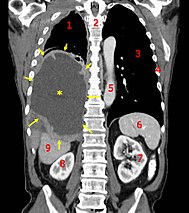
Cancer (medical term: malignant neoplasm) is a class of diseases in which a group of cells display uncontrolled growth (division beyond the normal limits), invasion (intrusion on and destruction of adjacent tissues), and sometimes metastasis (spread to other locations in the body via lymph or blood). These three malignant properties of cancers differentiate them from benign tumors, which are self-limited, and do not invade or metastasize. Most cancers form a tumor but some, like leukemia, do not. The branch of medicine concerned with the study, diagnosis, treatment, and prevention of cancer is oncology.
Cancer may affect people at all ages, even fetuses, but the risk for most varieties increases with age.[1] Cancer causes about 13% of all human deaths.[2] According to the American Cancer Society, 7.6 million people died from cancer in the world during 2007.[3] Cancers can affect all animals.
Nearly all cancers are caused by abnormalities in the genetic material of the transformed cells.[4] These abnormalities may be due to the effects of carcinogens, such as tobacco smoke, radiation, chemicals, or infectious agents. Other cancer-promoting genetic abnormalities may be randomly acquired through errors in DNA replication, or are inherited, and thus present in all cells from birth. The heritability of cancers are usually affected by complex interactions between carcinogens and the host's genome. New aspects of the genetics of cancer pathogenesis, such as DNA methylation, and microRNAs are increasingly recognized as important.
Genetic abnormalities found in cancer typically affect two general classes of genes. Cancer-promoting oncogenes are typically activated in cancer cells, giving those cells new properties, such as hyperactive growth and division, protection against programmed cell death, loss of respect for normal tissue boundaries, and the ability to become established in diverse tissue environments. Tumor suppressor genes are then inactivated in cancer cells, resulting in the loss of normal functions in those cells, such as accurate DNA replication, control over the cell cycle, orientation and adhesion within tissues, and interaction with protective cells of the immune system.
Diagnosis usually requires the histologic examination of a tissue biopsy specimen by a pathologist, although the initial indication of malignancy can be symptoms or radiographic imaging abnormalities. Most cancers can be treated and some cured, depending on the specific type, location, and stage. Once diagnosed, cancer is usually treated with a combination of surgery, chemotherapy and radiotherapy. As research develops, treatments are becoming more specific for different varieties of cancer. There has been significant progress in the development of targeted therapy drugs that act specifically on detectable molecular abnormalities in certain tumors, and which minimize damage to normal cells. The prognosis of cancer patients is most influenced by the type of cancer, as well as the stage, or extent of the disease. In addition, histologic grading and the presence of specific molecular markers can also be useful in establishing prognosis, as well as in determining individual
Subscribe to:
Posts (Atom)